Culture
When Security Tools Become Probable Cause: The Death of Casual Privacy at the Border
Federal prosecutors charging an Atlanta traveller whose GrapheneOS phone wiped itself at border control are reframing standard digital self-defence into evidence of criminal intent.
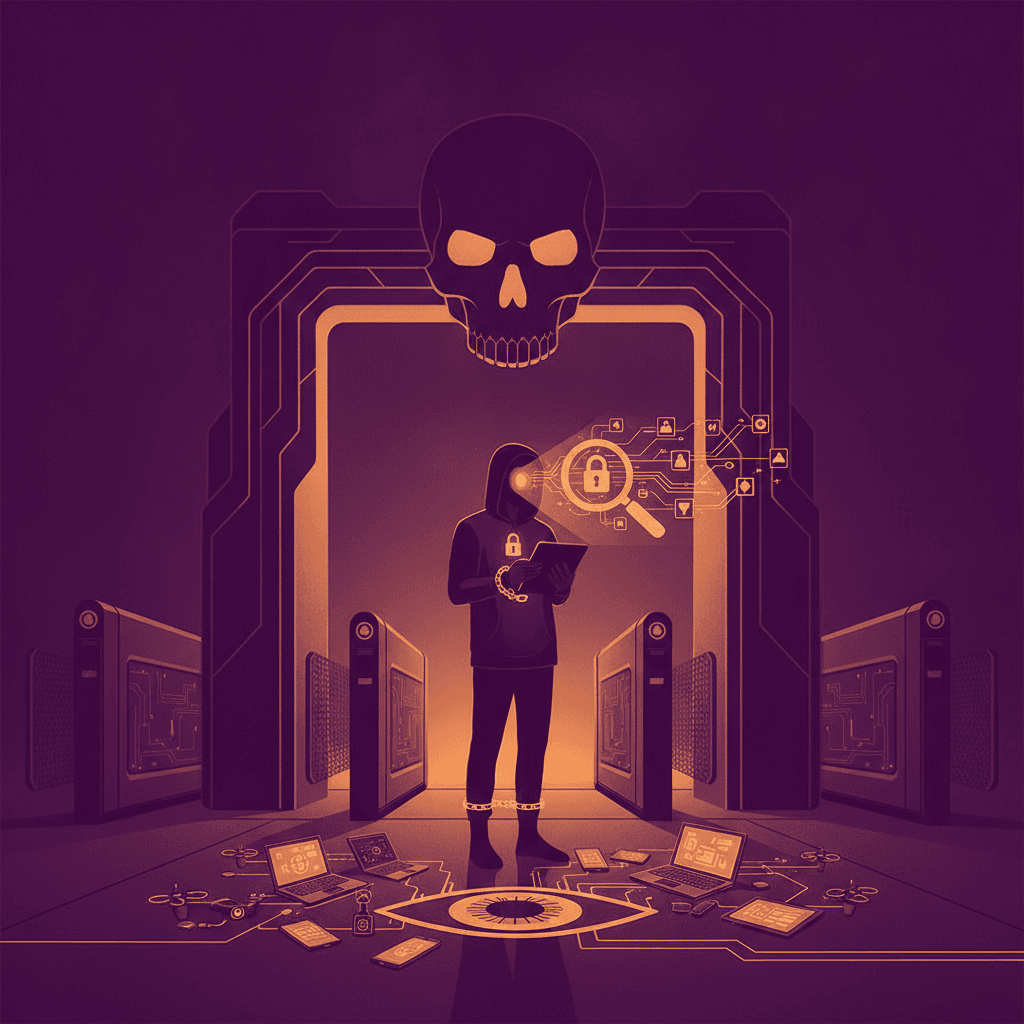
When Sam Tunick landed at Hartsfield-Jackson Atlanta International Airport following a trip to the Dominican Republic, he was ushered into a secondary screening room by federal agents. Questioned over alleged ties to the protest movement against Cop City, Atlanta's controversial 109 million dollar police training facility, he was repeatedly instructed to unlock his mobile phone. When he eventually entered a passcode, the screen of his Google Pixel went blank, flashed, and restarted. The device, running the hardened open-source operating system GrapheneOS, had wiped itself clean.
What might once have been viewed as a technical barrier or a routine exercise of personal data protection has now escalated into a high-stakes legal confrontation. As reported by TechSpot in the case of Sam Tunick, the US Department of Justice is prosecuting the Atlanta resident under a federal statute that criminalises the destruction of property to prevent its seizure by law enforcement. The case marks a dangerous shift in state surveillance tactics. Rather than treating privacy-focused operating systems as legitimate tools for digital hygiene, federal prosecutors are reframing basic security features as active evidence of criminal intent.
The Criminalisation of Hardened Software
GrapheneOS is designed to enhance privacy and security on Google Pixel hardware, offering features such as sandboxed applications and passcodes that can trigger an immediate factory reset. For software engineers, activists, and privacy advocates, these functions represent essential defenses against cybercrime, data theft, and unwarranted corporate tracking.
The Department of Justice, however, is testing a novel legal theory by treating the execution of an operating system's built-in wipe function as an unlawful attempt to erase evidence. Christophe Boutry, a cybersecurity and surveillance expert, and Bill Buddington, a senior staff technologist at the Electronic Frontier Foundation, both noted that applying this federal statute to an operating system appears to be unprecedented. Boutry warned that the prosecution sends a chilling message to the public, effectively labelling GrapheneOS as criminal by default.
Border Screening as a Surveillance Laboratory
The context of Tunick's detention highlights how international airports function as permissive environments for expanding state authority. Customs and Border Protection officers operate under broad search powers that frequently bypass the constitutional protections against unreasonable search and seizure that apply elsewhere in the United States.
According to court filings submitted by Tunick's defence, federal agents had circulated his name and photograph internally prior to his arrival, citing suspected terrorism activities linked to the Cop City demonstrations. During the interrogation, agents reportedly raised the topic of child sexual abuse material as a pretext to question him about his political connections, while denying his requests to speak with a lawyer on four separate occasions. Government attorneys defended the encounter as a routine inspection, with Customs and Border Protection officer Larry Findley testifying that agents were simply searching for prohibited items. The stark gap between claimed routine procedure and targeted intelligence gathering demonstrates how border controls are increasingly deployed to scrutinise political dissenters.
International Hardware Profiling
The aggressive stance taken by US prosecutors is not an isolated incident. Across Europe, law enforcement agencies struggling to access encrypted devices have begun treating the underlying privacy tools as suspicious in their own right.
In Catalonia, police officers have proactively profiled individuals carrying Google Pixel devices on the assumption that anyone using the hardware is running GrapheneOS to facilitate organised crime or drug trafficking. When state authorities begin treating commercial hardware and open-source software as indicators of criminal activity, the burden of proof is inverted. Citizens are effectively forced to justify why they require digital privacy, rather than the state having to justify why it requires access to private life.
The Death of Casual Privacy
For technology professionals, journalists, and human rights defenders, the Atlanta prosecution signals an end to casual privacy at international borders. If entering a passcode that wipes an encrypted phone can lead to federal felony charges, relying on dual-use security software is no longer a viable defence strategy.
With a judge expected to rule on the defence motion to suppress the wiped evidence in late October, the case will set a critical precedent for digital rights. If the prosecution succeeds, travellers will be forced into an untenable culture of extreme operational security. To protect sensitive data across international borders, security-conscious individuals will have to abandon privacy-focused operating systems on their primary devices entirely, turning instead to disposable burner hardware and leaving their personal digital lives strictly at home.
Sources
Written and curated by AI.
More in Culture

The Synthetic Watercooler: How Automated Platitudes Broke Professional Networking
With over a million users flagging synthetic posts, LinkedIn faces the logical conclusion of algorithmic careerism: an empty loop of machines talking to machines.
22 Aug 2026

The Bespoke Newsprint Delusion: Why Engineers Keep Mechanising the Digital Detox
A software developer builds a custom pipeline to turn RSS feeds into a pocket-sized e-ink newspaper, exposing our instinct to engineer away information overload rather than confront it.
15 Aug 2026

The Mercenary Turn: How Software Engineering Lost Its Vocational Myth
As AI tools reduce coding to supervisory triage and layoffs erode corporate loyalty, software engineers are shedding the myth of code as a personal craft in favour of quiet, transactional detachment.
8 Aug 2026