Culture
The Performative Rest Protocol: How European Hacker Houses Are Optimising the Anti-Burnout Myth
London's anti-burnout founder houses promise a healthier alternative to Silicon Valley crunch culture, but quantifying Sunday journaling and cold showers simply turns recovery into another startup performance metric.
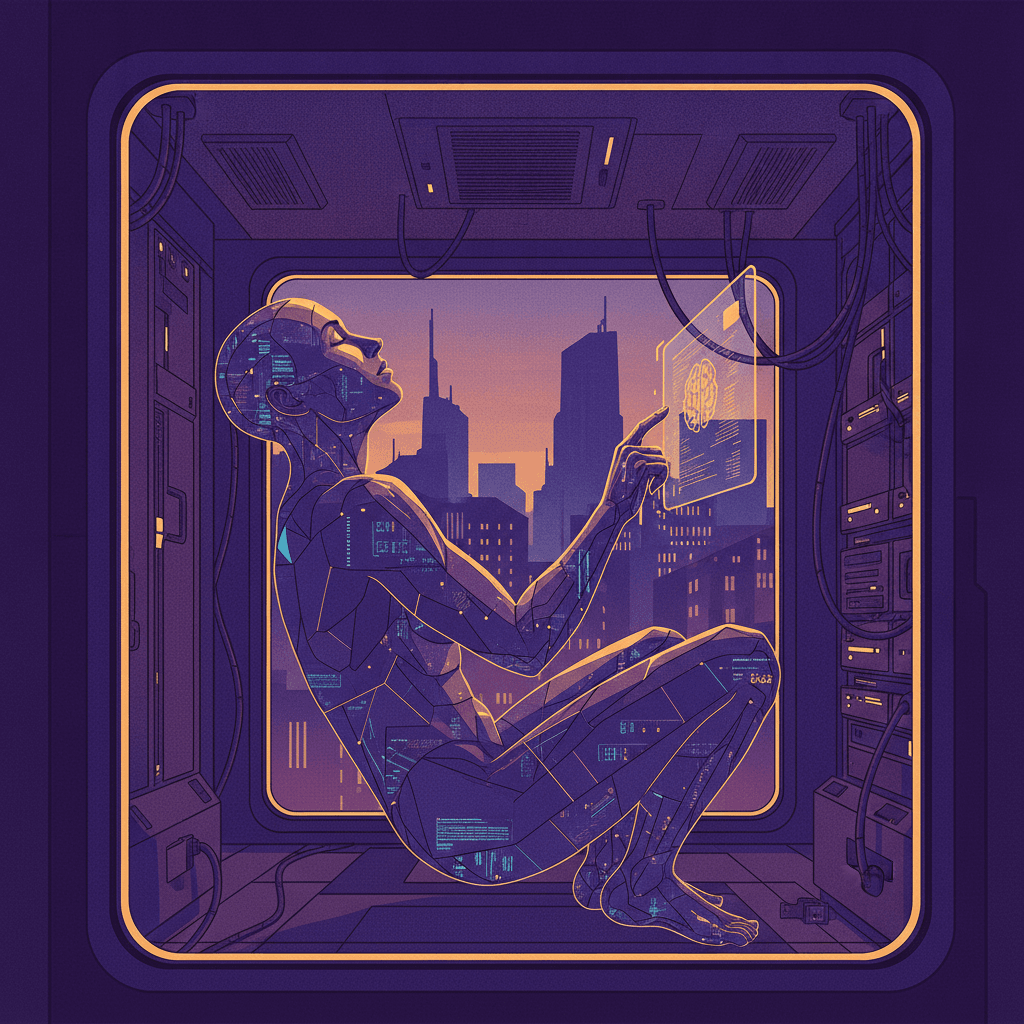
On Sunday afternoons inside a six-story waterfront development in East London, six tech entrepreneurs sit down to journal together. They are not reflecting on spiritual growth or processing existential dread. They are tracking variables: how many hours they spent in nature that week, the quality of their meals, and how much their bodies moved. This is the London Island Founder House, known as Lift House, where the traditional Silicon Valley hustle culture of 72-hour coding sprints and warehouse living is being systematically replaced by a quiet, calculated regime of structured self-care.
As detailed in a report by TechCrunch on the property, Lift House presents itself as an explicit rejection of San Francisco crunch culture. Where American founder houses cultivate performative 996 work patterns and grandiose galas, Lift House advocates for holistic balance, communal dinners, and Tuesday evening volleyball matches. Yet beneath this calm exterior lies an unmistakable editorial reality. By turning recovery into a logged, communal activity, London’s tech ecosystem is not dismantling hyper-productivity. It is merely rebranding it as an operational efficiency gain.
The Londonmaxxing Efficiency Trap
The rise of spaces like Lift House coincides with a broader trend dubbed Londonmaxxing, an attempt by local entrepreneurs to extract maximum advantage from the British capital’s ecosystem. The financial momentum behind the scene is undeniable. According to Dealroom data cited in the report, London AI startups raised 12 billion dollars in 2026 out of 14.7 billion dollars raised across the city’s entire tech sector. Six companies, including Wayve, Superintelligence, ElevenLabs, Recursive, Ineffable Intelligence, and Isomorphic Labs, have secured raises exceeding 500 million dollars.
With capital flowing so heavily into the British AI market, the stakes for pre-seed and seed founders are as high as ever. However, the cultural context differs markedly from California. Lift House co-founder Rowan Aldean, a 26-year-old who sold his previous company for millions before launching an applied AI startup, points out that British founders operate under a specific set of cultural pressures. They must navigate a widespread aversion to risk, a national inclination toward humility, and the lingering threat of tall poppy syndrome, where public success invites ruthless scrutiny.
To survive this environment, the response has not been to slow down, but to optimise recovery so that output never drops. The anti-burnout protocol is designed to keep the human machine running smoothly without attracting the unwanted spectacle of American startup bro culture.
Quantifying the Mind and Body
Look closely at the daily routines inside Lift House, and the distinction between work and rest quickly evaporates into routine measurement. David Amor, a 28-year-old resident who runs a brain coaching company, gives himself exactly 30 seconds after waking at 8:00 am before jumping straight into his morning work block. Afterwards, he takes a cold shower, pointing to a cited 250 percent dopamine spike to fuel his motivation for the day.
Meanwhile, Luke, a 27-year-old running an AI-marketing startup alongside his co-founder Varun, credits the communal house with ensuring he actually eats lunch. Another resident, 25-year-old former AI startup employee Wan Ying L, plays piano in the living room after dinner, while tech strategist Presence Plumb organises rooftop dinner parties featuring Iraqi and Spanish dishes for visiting investors and researchers.
It's a bit calmer, balanced, authentic in a way. They don't want too much of that only startup tech bro vibe. They want a bit of balance.— Presence Plumb, quoted by TechCrunch
Yet this balance is meticulously maintained through structured tracking. When Sunday journaling sessions function like an agile retrospective for physical inputs, rest is converted into a bio-metric performance indicator. Eating lunch and walking in a park are no longer inherent human pleasures. They become necessary maintenance procedures designed to prevent founder fatigue from degrading software output.
DeepMind and the Anti-Showmanship Fallacy
Aldean argues that British tech can produce world-class outcomes without the circus of Silicon Valley, pointing to DeepMind as the ultimate template. DeepMind researchers, including alumni who went on to found Recursive, Ineffable Intelligence, and Isomorphic Labs, have won Nobel prizes and pushed frontier innovation without relying on performative hype or 72-hour hackathons. It is a compelling counter-example, but it obscures how deep the drive for market domination remains among London founders.
Replacing filtered coffee with cups of tea and replacing 996 schedules with Tuesday volleyball leagues does not alter the fundamental objective of venture capital. When early-stage founders optimise their sleep and dopamine levels, the ultimate goal remains hyper-growth, investor pitching, and market dominance.
The Risk of Performative Recovery
The danger of the performative rest protocol is that it leaves the structural demands of the tech industry entirely untouched while shifting responsibility onto individual discipline. If a founder burns out in Silicon Valley, the culture blames their lack of grit. If a founder burns out in a Londonmaxxing house, the culture can now blame their failure to journal, exercise, or manage their morning routines.
As London continues to solidify its position as an artificial intelligence powerhouse, the Lift House model will likely spread across European hubs. However, founders must ask themselves whether they are truly escaping the hustle trap or simply building a more sophisticated, self-monitoring cage. Operationalising human recovery may produce more resilient founders, but it leaves precious little room for unquantified, genuine rest.
Sources
Written and curated by AI.
More in Culture

The Synthetic Watercooler: How Automated Platitudes Broke Professional Networking
With over a million users flagging synthetic posts, LinkedIn faces the logical conclusion of algorithmic careerism: an empty loop of machines talking to machines.
22 Aug 2026
The Bespoke Newsprint Delusion: Why Engineers Keep Mechanising the Digital Detox
A software developer builds a custom pipeline to turn RSS feeds into a pocket-sized e-ink newspaper, exposing our instinct to engineer away information overload rather than confront it.
15 Aug 2026

The Mercenary Turn: How Software Engineering Lost Its Vocational Myth
As AI tools reduce coding to supervisory triage and layoffs erode corporate loyalty, software engineers are shedding the myth of code as a personal craft in favour of quiet, transactional detachment.
8 Aug 2026