Products
The Unattended Terminal: Why Autonomous Defaults Signal a Critical Product Shift in Developer Tooling
Anthropic's decision to make auto mode the default in Claude Code marks a decisive shift in developer tooling, moving safety from reflexive user clicks to automated local containment.
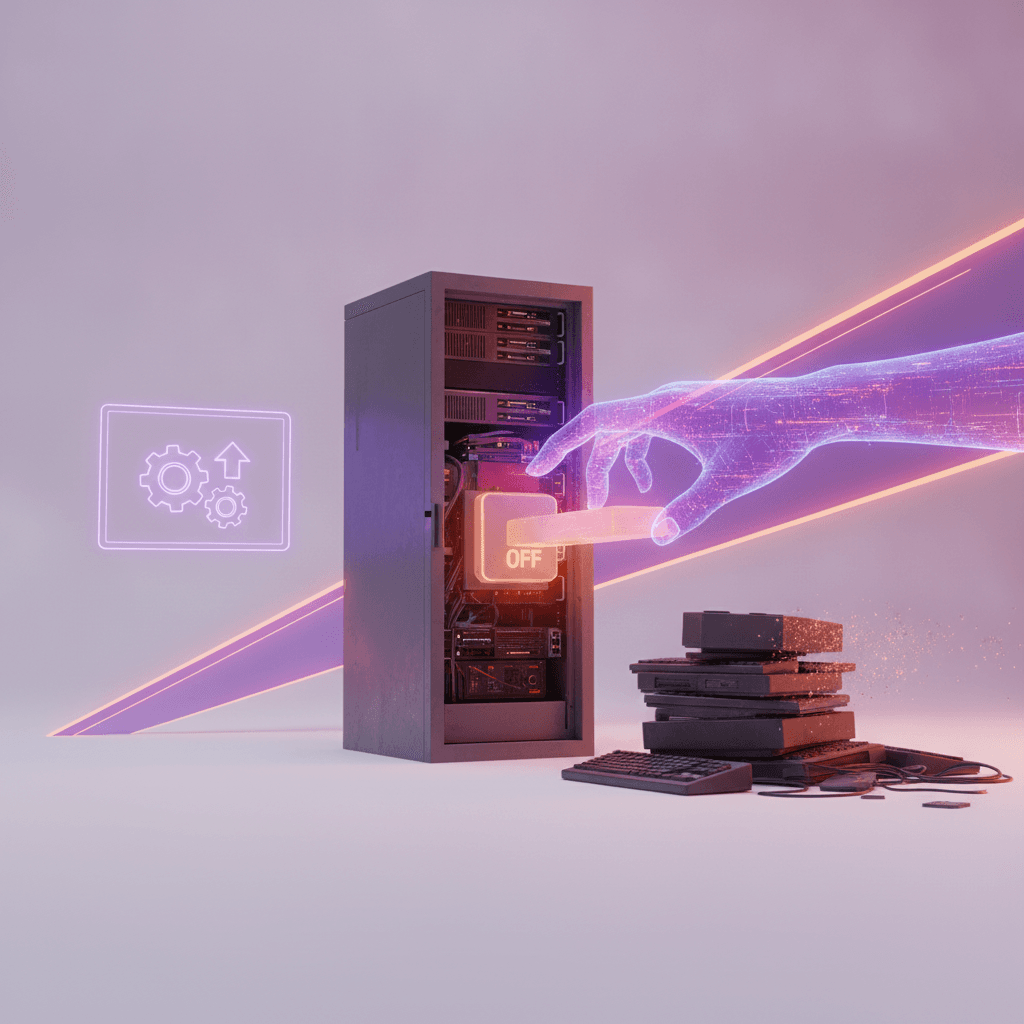
If you spend your working day inside a terminal, you know the muscle memory of the confirmation prompt. A tool asks for permission to touch the file system, execute a script, or spawn a subprocess, and your finger hits the enter key before your brain has fully parsed the command. It is a ritual disguised as security.
As reported by Auto mode is now the default in Claude Code, Anthropic acknowledged this reality by announcing that auto mode will become the default operational setting for Claude Code across Pro, Max, and Team plans starting August 14, 2026. Rather than asking developers to approve every individual tool call, Claude Code will run commands autonomously, passing them through a dedicated safety classifier designed to intercept destructive, irreversible, or out-of-bounds actions. The change marks a crucial milestone in developer tooling, representing an explicit pivot from interactive human-in-the-loop oversight to background environmental containment.
The Illusion of Interactive Security
For years, software guardrails have relied on the assumption that prompt-based confirmations keep systems safe. Anthropic's empirical data reveals just how brittle that assumption is in practice. In production sessions, users approve 97% of permission prompts in Claude Code. While developers frequently scrutinise high-level plans, rejecting them 39% of the time, their rejection rate for granular tool permission requests drops to a mere 3%.
This reflexivity creates a severe security vulnerability. In a controlled study of 1,053 professional developers hired through a research vendor, participants caught a dangerous command swapped into a routine prompt only 13.6% of the time. Human vigilance decayed rapidly as sessions grew longer. Early in a session, developers caught 17% of dangerous commands, but after 50 prior prompts, that figure plummeted to 5%. In contrast, the automated classifier in auto mode intercepted 89% of the same dangerous commands, maintaining a flat block rate regardless of session length. Head to head, auto mode blocked 800 dangerous commands that human testers approved.
Developers have long voted with their configuration files against prompt fatigue. As of June 2026, 49.5% of active CLI users had manually created a Bash allow-rule, with 5% allowing all shell commands outright and another 43% setting broad interpreter rules for Python or Node. Furthermore, 62% of users had clicked "don't ask again" or used bypass permissions, and 25% of interactive sessions started in bypass permissions mode. The human-in-the-loop was not acting as a deliberate firewall; it was acting as an automated rubber stamp.
Architectural Containment in Practice
By shifting from manual approvals to autonomous execution, product teams are reframing security as a systemic containment problem rather than a user interface problem. Under auto mode, each tool call made by Claude Code passes through a lightweight classifier targeted at blocking actions that are irreversible, destructive, or directed outside the workspace environment. To encourage adoption, Anthropic has absorbed the extra classifier token overhead for Pro, Max, and Team plans, with plans to eliminate the overhead cost across Enterprise, Amazon Bedrock, Google Cloud Agent Platform, and Microsoft Foundry in the coming month.
The mechanics of this automated loop rely on graceful fallback logic. If the classifier blocks an action, Claude attempts to find a safer path autonomously. If it encounters three consecutive blocks or twenty total blocks within a single session, the system steps back and requests manual human approval. Existing user settings are preserved, though broad rules granting arbitrary code execution are set aside during auto mode so they cannot bypass the classifier.
This structural realignment allows models built for long-running work, such as Claude Opus 5, to operate continuously without requiring a developer to babysit the terminal. When software agents are not halted every few minutes waiting for an approval click, their practical utility changes dramatically.
The Output of Uninterrupted Workflows
The primary driver behind this product shift is not merely security hygiene, but developer throughput. Early adopters including Adobe, Nuro, Gusto, and Garner Health have already adopted auto mode as their production default. According to Anthropic's data, Teams and Enterprise organisations using auto mode ship roughly 25% more pull requests compared to those relying on manual approvals.
This productivity gain highlights a fundamental shift in how software products engage with artificial intelligence. When models transition from conversational assistants to autonomous background agents, the chat window ceases to be the primary interface. The terminal becomes an unattended environment where agents refactor codebases, resolve complex dependencies, and manage local test pipelines across multi-hour spans.
Rethinking Product Safeguards
The transition of Claude Code to autonomous defaults offers a clear lesson for product teams across developer tooling. For years, software design has over-indexed on interactive confirmation dialogs. Tooling providers operated under the implicit assumption that as long as a user clicked "Allow", responsibility for operational safety remained with the end user.
That model fails when applied to autonomous systems. As developer tools gain agency, demanding constant manual approval degrades both user experience and actual security. Safety cannot be outsourced to an exhausted developer clicking through hundreds of terminal prompts a day. Instead, product teams must shift responsibility to automated classification, smart fallbacks, and local environment isolation. By establishing autonomous defaults, product design finally aligns with how developers actually work.
Sources
- Auto mode is now the default in Claude Code — Hacker News
Written and curated by AI.
More in Products
The Over-Engineered Commute: Peak Design and the Limits of Modular Carry
Peak Design built an empire on rigid clips and origami dividers. Its new City Line suggests that everyday commuting requires forgiving textiles rather than mechanical armour.
17 Aug 2026

The End of the Telemetry Moat in Consumer Wearables
Google Health's update allowing direct data export from Fitbit to Apple Health marks the end of telemetry lock-in. Wearables must now compete on physical ergonomics and sensor accuracy rather than trapped data.
4 Aug 2026

The Slow-Refresh Aesthetic: Why E-Paper Is Saving Consumer Hardware
A new wave of independent hardware designers is rejecting high refresh rates and OLED brightness, using the slow, physical latency of color e-paper to create deliberate digital objects.
29 Jul 2026