Products
The Slow-Refresh Aesthetic: Why E-Paper Is Saving Consumer Hardware
A new wave of independent hardware designers is rejecting high refresh rates and OLED brightness, using the slow, physical latency of color e-paper to create deliberate digital objects.
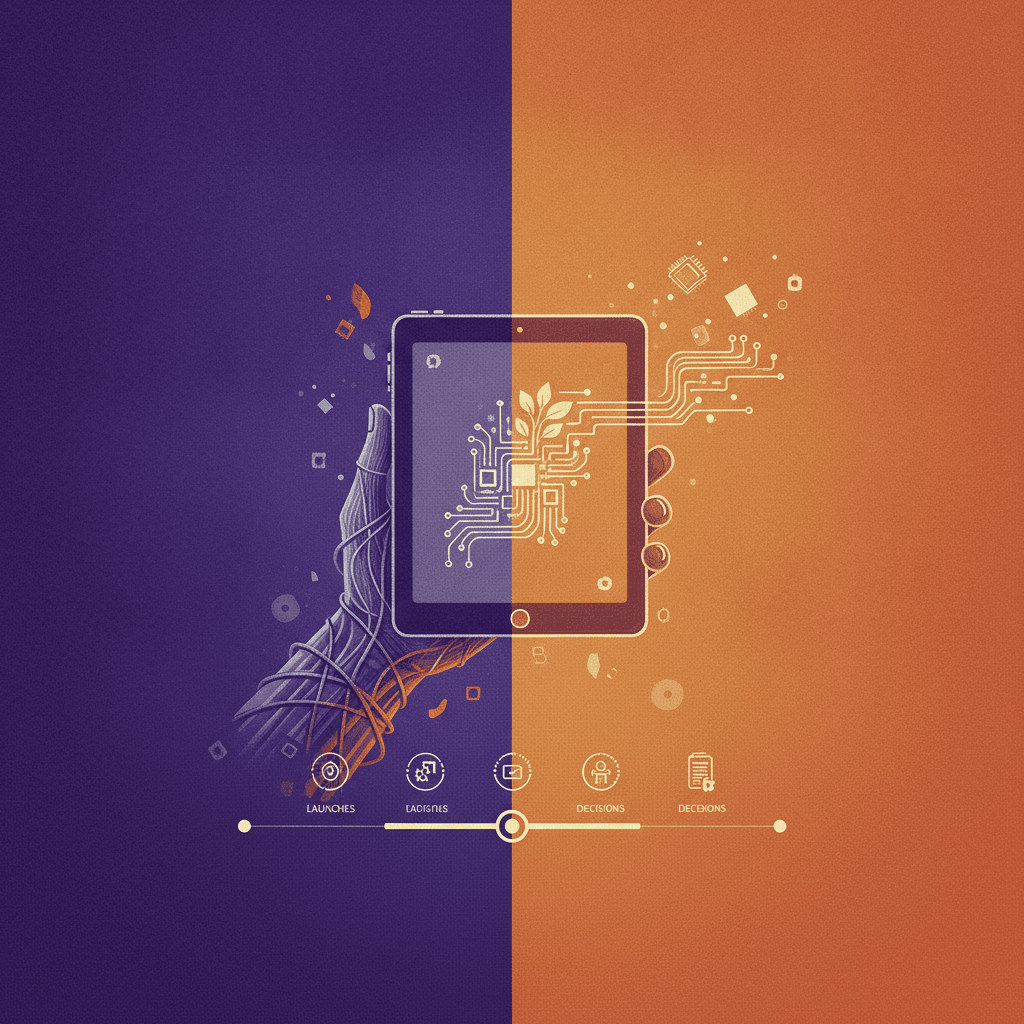
Modern consumer hardware is built on an unrelenting premise: faster is always better. Display manufacturers compete aggressively on refresh rates, pushing mobile screens from 60Hz to 120Hz and beyond, while sub-millisecond response times and luminous OLED panels promise an unmediated window into digital space. Yet, as screen technology achieves near-flawless fluidity, a quiet counter-movement is emerging among independent hardware designers. Rather than treating display latency as an engineering flaw to be erased, a new wave of experimental devices is explicitly embracing the slow, physical constraints of electronic paper.
The clearest manifestation of this ethos is reFrame, an experimental camera created by designer Kaloyan Kolev and a small group of collaborators. On the surface, reFrame operates like a standard digital point-and-shoot, but its central interaction is defined by deliberate delay. When a user presses the shutter button, the captured image does not flash instantly onto a glowing liquid crystal panel. Instead, the camera initiates a 15-second rendering sequence across a four-inch color e-paper display.
The Mechanics of Deliberate Friction
This rendering delay is not a software bottleneck caused by an underpowered processor; it is an intrinsic physical property of the display chemistry. As reported by ReFrame – The EPaper Camera, the device relies on precise electrical charges to physically shift micro-particles of ink into position across the screen grid. Watching an image materialize on the device resembles the gradual emergence of a print in a chemical darkroom, with six distinct color pigments settling into place one by one.
The underlying technical architecture relies entirely on accessible, off-the-shelf components. Inside the enclosure sits a Raspberry Pi Zero microcomputer paired with a Pi Camera 3 module, a standard rechargeable battery, and a 4-inch eInk Spectra 6 color panel. Because electronic paper requires power only when changing state, reFrame doubles as an ambient desk photo frame when idle. The screen retains the final image indefinitely without consuming battery power, and the only way to clear the display is to take another picture.
Dithering as a Visual Medium
The physical constraints of the eInk Spectra 6 display force a radical translation of traditional photographic data. Restricted to six physical pigments, the display software cannot render smooth digital gradients or typical continuous-tone color spaces. Instead, the onboard software dithers the image, converting raw camera data into a patterned grid of distinct color dots.
The visual result occupies a compelling space between a physical newspaper halftone print and the dithered bitmapped graphics of early computer games. It gives digital photography an almost tactile, printed character that contrasts sharply with the hyper-processed, algorithmically smoothed output of modern smartphones. Rather than attempting to disguise the hardware's color and resolution limits, reFrame turns those boundaries into the defining visual texture of the device.
Crucially, this design choice does not mean digital fidelity is lost entirely. While the slow e-paper display remains the primary interface for viewing shots, the system automatically archives full-resolution original files alongside the dithered versions. Users can access and download both files via an integrated web dashboard, combining slow physical display with standard digital storage.
Open Blueprints and the Slow Hardware Movement
Rather than commercialising the prototype through traditional manufacturing channels or crowdfunding campaigns, Kolev published reFrame as an open-source project on GitHub. Anyone with basic technical skills can source the components, build the housing, and flash the software themselves. While Kolev hopes to offer individual assembled units for sale in the future, keeping the initial blueprints open ensures the project remains an active reference for experimental hardware design.
To test how enforced latency affects professional creative workflows, the project collaborated with creative agency APOSSIBLE to send prototype units to four international photographers: Denisse Ariana Perez, Douglas Eveleigh, Marco Galloway, and Olya Oleinic. Their work with the camera demonstrates how structural delay alters artistic intent. When every capture demands a 15-second commitment and remains pinned to the hardware until the next shot, the rapid-fire, low-stakes tendencies of digital photography give way to something far more considered.
Beyond the High-Refresh Paradigm
The significance of reFrame extends beyond retro-tech novelty or simple nostalgia for instant cameras. It highlights a growing interest in hardware that resists the speed and slickness of contemporary consumer electronics. High-refresh OLED screens are engineered for immediate feedback, rapid scrolling, and continuous attention capture. In contrast, e-paper hardware introduces deliberate physical friction.
As multi-pigment e-paper technology continues to mature, its applications in standalone consumer hardware are expanding well beyond traditional e-readers. By treating slow refresh rates and display limitations as distinctive design features rather than technical drawbacks, creators can build devices that respect human attention, encourage focus, and restore a sense of physical permanence to digital media.
Sources
- ReFrame – The EPaper Camera — Hacker News
Written and curated by AI.
More in Products
The Over-Engineered Commute: Peak Design and the Limits of Modular Carry
Peak Design built an empire on rigid clips and origami dividers. Its new City Line suggests that everyday commuting requires forgiving textiles rather than mechanical armour.
17 Aug 2026
The Unattended Terminal: Why Autonomous Defaults Signal a Critical Product Shift in Developer Tooling
Anthropic's decision to make auto mode the default in Claude Code marks a decisive shift in developer tooling, moving safety from reflexive user clicks to automated local containment.
10 Aug 2026

The End of the Telemetry Moat in Consumer Wearables
Google Health's update allowing direct data export from Fitbit to Apple Health marks the end of telemetry lock-in. Wearables must now compete on physical ergonomics and sensor accuracy rather than trapped data.
4 Aug 2026