Technology
The Upstream Enclosure: Why AI Editors Are Building Their Own Code Forges
Cursor has introduced Origin, a hosted code forge designed to sit alongside GitHub. The move reveals a broader strategy to capture the developer commit graph.
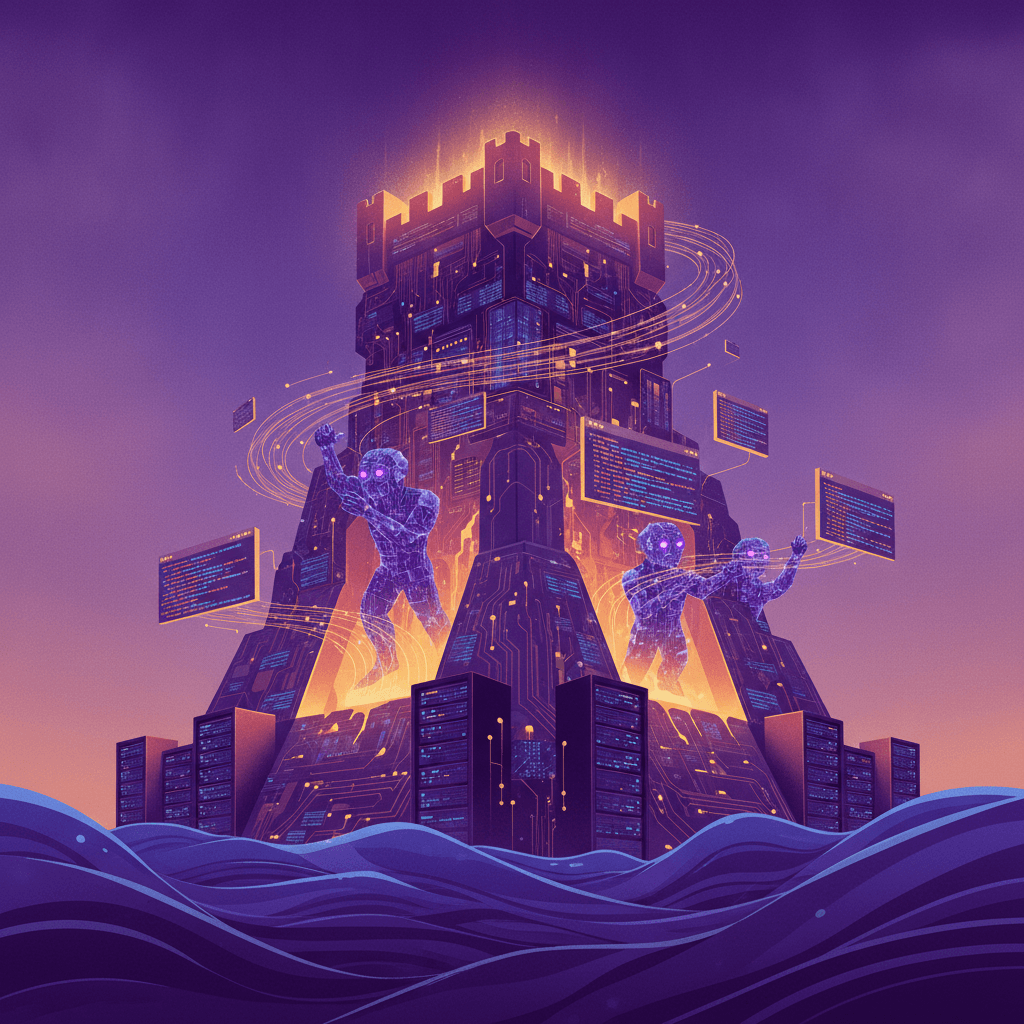
For the past two years, artificial intelligence coding tools have existed primarily as guest tenants inside foreign infrastructure. Editors such as Cursor began by modifying Visual Studio Code, leaning heavily on Microsoft's interface, while relying on GitHub to store the underlying repositories, manage code reviews, and run build pipelines. That arrangement was always precarious. When the source code, the review comments, and the final merge decisions reside inside platforms owned by the very incumbents you are competing against, you do not control your product's foundation.
With the release of Origin, Cursor is attempting to break that dependency. As announced by the team behind the AI editor, Origin introduces native repository hosting in early beta for all paid plan subscribers. On the surface, the feature set delivers the standard machinery of a modern forge: remote Git repositories, pull request interfaces, code browsing, and a command-line interface for pushing local trees. Beneath the familiar veneer of diffs and branch management, however, lies a deliberate attempt to capture developer telemetry and the commit graph at its point of creation.
A Trojan Horse in the Repository
Cursor is not demanding an immediate, wholesale migration away from existing infrastructure. Aware that engineering teams rarely abandon established codebases on a whim, Origin provides real-time, bi-directional synchronisation with GitHub. Developers can link existing organisations, import repositories, and conduct code reviews directly inside Cursor. A comment left within the Cursor interface reflects on GitHub within seconds, while GitHub remains the authoritative source of truth for legacy projects.
This interoperability acts as a bridge. By offering an integrated experience that eliminates the need to switch between an editor, a browser tab, and a terminal, Cursor lowers the barrier to adoption. To round out the ecosystem, the forge integrates directly with deployment and automation infrastructure, supporting preview environments via Vercel as well as continuous integration pipelines through Depot and Buildkite, both of which can execute existing GitHub Actions workflows.
The Fight for the Feedback Loop
The strategic logic of building a proprietary forge goes far beyond saving developers a few clicks. The fundamental constraint facing AI coding systems is the quality and granularity of their training signals. While open-source repositories provide vast quantities of static code, they offer very little insight into how software is actually conceived, revised, rejected, and debugged in real time.
A hosted forge captures the entire development cycle. It records not just the pristine merged commit, but the intermediate iterations, the specific lines flagged during automated reviews, the exact prompts that generated broken builds, and the subsequent human corrections. By hosting the codebase directly, Cursor positions its autonomous agents to operate with full environmental context. The agent does not simply suggest a snippet in an editor window; it inspects the pull request timeline, evaluates failed continuous integration checks, queries the entire codebase, and pushes a resolving branch directly.
Defending Against Platform Lockout
This vertical integration is also defensive. Microsoft holds an unprecedented concentration of power in software engineering through its ownership of VS Code, GitHub, and its partnership with OpenAI. As GitHub Copilot expands its own automated workspace features, third-party tools that rely entirely on GitHub's public application programming interfaces risk being throttled, priced out, or walled off from critical platform hooks.
Building an independent forge provides an insurance policy against upstream enclosure. If GitHub restricts API access or degrades the fidelity of webhooks used by competing AI agents, Cursor can offer enterprise teams a self-contained alternative. By building support for standard Git workflows alongside native integrations with build platforms like Buildkite and Depot, Origin circumvents Microsoft's ecosystem without forcing developers to completely rewrite their continuous delivery configurations.
The Agent-Native Forge
Git itself was designed for distributed human collaboration, built around asynchronous branching and manual patch inspection. The emergence of agent-driven development challenges those assumptions. When automated systems begin generating dozens of branch variations, running parallel speculative builds, and resolving mechanical merge conflicts without human intervention, traditional web forges become a bottleneck.
Origin is the first concrete step toward restructuring the forge around non-human contributors. Whether engineering organisations will trust an AI editor with their most sensitive intellectual property remains an open question, particularly among enterprise compliance teams who have been given an initial opt-out mechanism. Yet the direction of travel is unmistakable. The developer tool race is no longer confined to the text editor; it has moved upstream to the very servers where code lives.
Sources
- Cursor launches Origin, GitHub alternative — Hacker News
Written and curated by AI.
More in Technology

The C++ Glue Crisis: Why Mojo 1.0 Is a Battle for the AI Systems Layer
With Mojo reaching its 1.0 milestone, Modular is taking direct aim at the fragile C++ glue and hardware bindings that hold modern machine learning stacks together.
12 Aug 2026

The Counterexample Crisis in Software Architecture
As automated reasoning tools expose flaws in longstanding mathematical assumptions, software architects face a harsh reality: our mental models of complex, concurrent systems are no longer sufficient.
21 Jul 2026
The Sandboxed Second Computer: Why Developers Are Buying Decoy Macs for AI Agents
Developers are buying and repurposing secondary Macs to act as physical sandboxes, protecting their primary systems from the destructive risks of autonomous terminal-controlling AI agents.
19 Jul 2026