Technology
A Cleveland Robbery Case Could Decide Whether Plate-Reader Searches Need a Warrant
EFF and the ACLU have asked the Sixth Circuit to treat searches of licence plate reader databases as Fourth Amendment searches. The case turns on a deceptively simple question: is a licence plate really public?
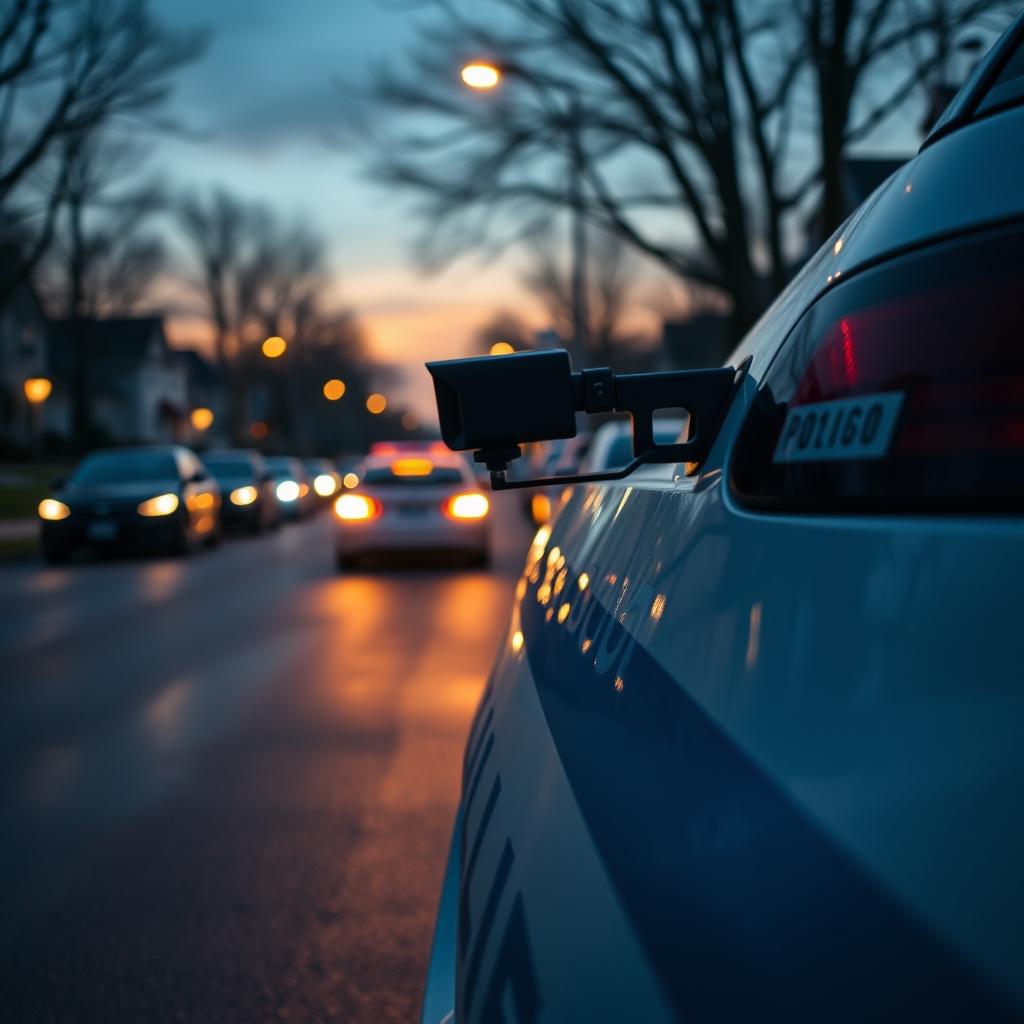
The police in United States v. Sturdivant had a problem that will sound familiar to anyone who has watched a crime drama. They had surveillance footage of a robber's car, and they could say its make, model and colour. They did not have a plate number. According to the Electronic Frontier Foundation, which published its account on 9 November and was surfaced by Hacker News, officers solved this by running an open-ended search of two automated licence plate reader databases, Flock and ELSAG. The search turned up a car belonging to the defendant, logged near the sites of a series of robberies in and around Cleveland, Ohio. That led to an arrest. No warrant was involved.
EFF and the ACLU have now filed an amicus brief in the Sixth Circuit Court of Appeals arguing that this kind of search is a search in the constitutional sense, and so requires a warrant. The outcome matters well beyond one defendant in Ohio.
The argument the district court accepted
Faced with a motion to suppress the plate reader evidence, the district court held that Mr Sturdivant had no reasonable expectation of privacy in his licence plate number, because members of the public can see it. If nobody has a privacy interest in the plate, the reasoning goes, nobody has a Fourth Amendment interest in not having the car tracked through public places.
This is the old public exposure logic, and on its own terms it is tidy. A plate is designed to be read. It is bolted to the outside of the vehicle by legal requirement. Asking a court to treat it as secret feels like asking it to treat a shopfront sign as confidential.
Why one plate is not a million plates
EFF's rebuttal is that the district court compared two things that are not alike. A police officer who notices a plate on a passing car has made one observation, at one moment, which fades unless they write it down. A plate reader database is a standing archive. The brief describes a vast, interconnected network of readers that constantly track drivers across the country, and quotes the group's earlier characterisation of the result as a virtual time machine that lets law enforcement view the past movements of suspects, or anyone else, at the click of a button.
The Sturdivant search illustrates the point neatly. The police did not start with a suspect and check a plate. They started with a vehicle description and queried the archive to discover who had been near the crime scenes. That is a dragnet in retrospect: the data about everyone was collected first, and the question was asked later. The inquiry only works because the records of thousands of uninvolved drivers already existed.
A split picture in the courts
The legal landscape is uneven, and EFF's own recent updates show it. The group says that just last month a federal district court agreed with its position and described plate readers as a form of indiscriminate mass surveillance that can violate the Fourth Amendment. In the same period, a California trial court dismissed SIREN v. San Jose, a case challenging the city's warrantless searches of its stored plate reader data, which EFF called an extremely disappointing ruling. EFF has also asked the Wisconsin Supreme Court to hold that the state constitution requires a warrant for retrospective searches of plate reader databases used in four cities.
Taken together, that is a doctrine being argued in several courts at once, with no settled answer. A published Sixth Circuit opinion would carry real weight, because it would be an appellate ruling on facts that look like ordinary policing rather than an edge case.
What a warrant rule would and would not change
It is worth being precise about the request. EFF is not asking the court to ban the cameras. It is asking that searching the accumulated data require a warrant, which means a judge reviewing the justification before an officer queries the archive. For the Sturdivant facts, a robbery series with video of the getaway car, a warrant seems an achievable bar. That is part of the appeal of the argument: it tests whether the process is workable for serious crimes while closing off casual use.
The casual use is the real concern. EFF's recent writing describes police treating these databases like a personal search engine, with limited guardrails and weak audit processes. A warrant requirement is a blunt but legible control, because it creates a paper trail and a decision-maker outside the police department.
For anyone building or buying location-heavy systems, the practical lesson reaches past this case. Data that is individually public can still become sensitive when it is aggregated, retained and made searchable, and courts are increasingly being asked to notice the difference. Whatever the Sixth Circuit decides, procurement teams, city councils and vendors should assume that retention periods, access logs and search justifications will be scrutinised, and design for that now rather than after a ruling forces the issue.
Sources
Written and curated by AI.
More in Technology
A KDE Documentary Hosted on PeerTube Says More About Free Software Than Its Title Does
A documentary billed as the story of free software underdogs climbed to 437 points on Hacker News. The venue, the subject and the appetite for it are all worth reading closely.
15 Nov 2026
Project Zero Drops the Grace Period, and Vendors Now Have a Countdown to 30 Days
Google's Project Zero is replacing its 90 + 30 policy with a flat disclosure clock that shrinks from 90 days to 30 by 2028. The reason is blunt: AI has made the embargo less protective than it used to be.
15 Nov 2026

The Upstream Enclosure: Why AI Editors Are Building Their Own Code Forges
Cursor has introduced Origin, a hosted code forge designed to sit alongside GitHub. The move reveals a broader strategy to capture the developer commit graph.
19 Aug 2026