Technology
The Sandboxed Second Computer: Why Developers Are Buying Decoy Macs for AI Agents
Developers are buying and repurposing secondary Macs to act as physical sandboxes, protecting their primary systems from the destructive risks of autonomous terminal-controlling AI agents.
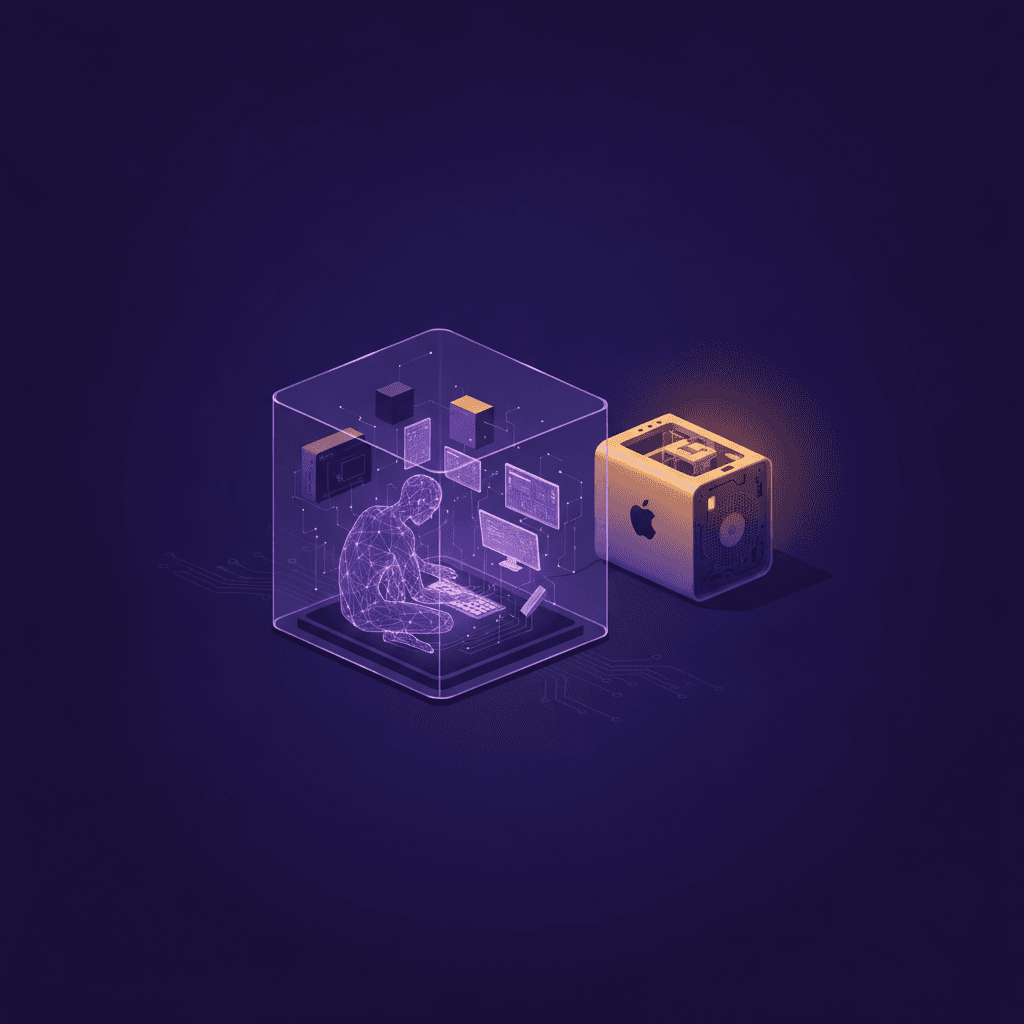
The market for used Apple hardware has found an unlikely new catalyst. Software engineers are purchasing secondary computers, particularly older Mac Minis and MacBooks, not to handle heavy compilation workloads or to build home media servers, but to act as sacrificial lambs. This trend has emerged alongside a new breed of developer tools, such as Anthropic's Claude Code, which interact directly with command-line interfaces and can execute system-level operations autonomously.
These AI agents are designed to write code, install packages, run tests, and debug software. To do this work effectively, they require deep access to the operating system. Running these tools with open permissions on a primary workstation, however, is a massive security liability. A single hallucinated command or an unintended destructive loop could wipe local databases, leak proprietary API keys, or compromise sensitive personal data. The solution for a growing number of developers is simple: run the agent on a separate physical machine with absolutely nothing to lose.
The Limits of Virtual Containers
For years, developers have relied on software containers like Docker to isolate untrusted code. While containerisation is effective for standard web services, it falls short when dealing with agents that need to interact with GUI applications or simulate human keyboard and mouse inputs. As documented in a technical walkthrough titled "How to set up your spare Mac for Claude Code to fully control", virtual environments introduce significant friction when working with native desktop software.
Running an agent in a container on a primary machine does not offer complete isolation. Outbound network requests still flow through the host machine's network interface, potentially exposing internal local-network resources to the agent. Furthermore, containers struggle to run macOS-specific applications. Developers who want their AI agents to interact with heavy desktop software, such as the Unity game engine, find that virtualised Linux environments simply cannot run the native Mac software they need to build and test their projects.
Constructing the Physical Sandbox
The setup process for a decoy Mac involves stripping away all personal identifiers. Security guidelines for setting up these isolated environments recommend starting with a completely wiped system. Developers are advised to perform a factory reset, bypass the Apple ID sign-in during the initial setup to ensure no iCloud data or keychain passwords sync to the machine, and create a fresh local administrator account.
Once the machine is clean, developers enable Remote Login via SSH, allowing them to control the machine from their main workstation. To give the AI agent the freedom to install dependencies and configure the environment without constant human intervention, developers configure passwordless sudo privileges for the target account. This allows the agent to execute administrator commands silently, a necessity when running Claude Code with the dangerously-skip-permissions flag enabled. The primary machine can then communicate with the secondary Mac over the local network using a secure SSH key, keeping the main development environment entirely segregated from the agent's actions.
Always-On Agents from the Pocket
Beyond security, the dedicated secondary Mac setup unlocks new workflows that a simple virtual machine cannot replicate. Because the secondary Mac is a standalone, always-on device on the local network, developers can access it remotely from other devices. By running the agent on a dedicated host, a developer can interact with their development environment directly from the Claude mobile app on a smartphone, sending high-level instructions to the agent while away from their desk.
This setup also allows developers to utilise their existing Claude subscription usage. Rather than paying for third-party API platforms that try to abstract these agents, developers can leverage the raw power of official terminal tools directly on native hardware. It represents a shift from abstract AI chat interfaces to persistent, physical digital workers.
A Practical Future for Agentic Hardware
The rise of decoy Macs highlights a broader truth about the current state of AI agents: safety and utility are currently in opposition. To make agents useful, developers must give them the power to execute commands, modify files, and browse the web. But giving those capabilities to an autonomous system on a primary machine is an unacceptable risk for most professional environments.
Until operating systems build more robust, native, and low-overhead sandboxing tools specifically designed for AI agents, buying a second-hand Mac Mini remains one of the most practical security measures a developer can take. It is a physical solution to a software problem, proving that sometimes the best way to secure a digital environment is to buy a second piece of silicon.
Sources
Written and curated by AI.
More in Technology

The Upstream Enclosure: Why AI Editors Are Building Their Own Code Forges
Cursor has introduced Origin, a hosted code forge designed to sit alongside GitHub. The move reveals a broader strategy to capture the developer commit graph.
19 Aug 2026

The C++ Glue Crisis: Why Mojo 1.0 Is a Battle for the AI Systems Layer
With Mojo reaching its 1.0 milestone, Modular is taking direct aim at the fragile C++ glue and hardware bindings that hold modern machine learning stacks together.
12 Aug 2026

The Counterexample Crisis in Software Architecture
As automated reasoning tools expose flaws in longstanding mathematical assumptions, software architects face a harsh reality: our mental models of complex, concurrent systems are no longer sufficient.
21 Jul 2026