Psychology
The Perceived Labour Illusion: Why AI and Fintech Interfaces Intentionally Slow Down
Product teams at companies from Wise to OpenAI regularly inject artificial delays and progress indicators into instant workflows, using the labour illusion to build trust in automated systems.
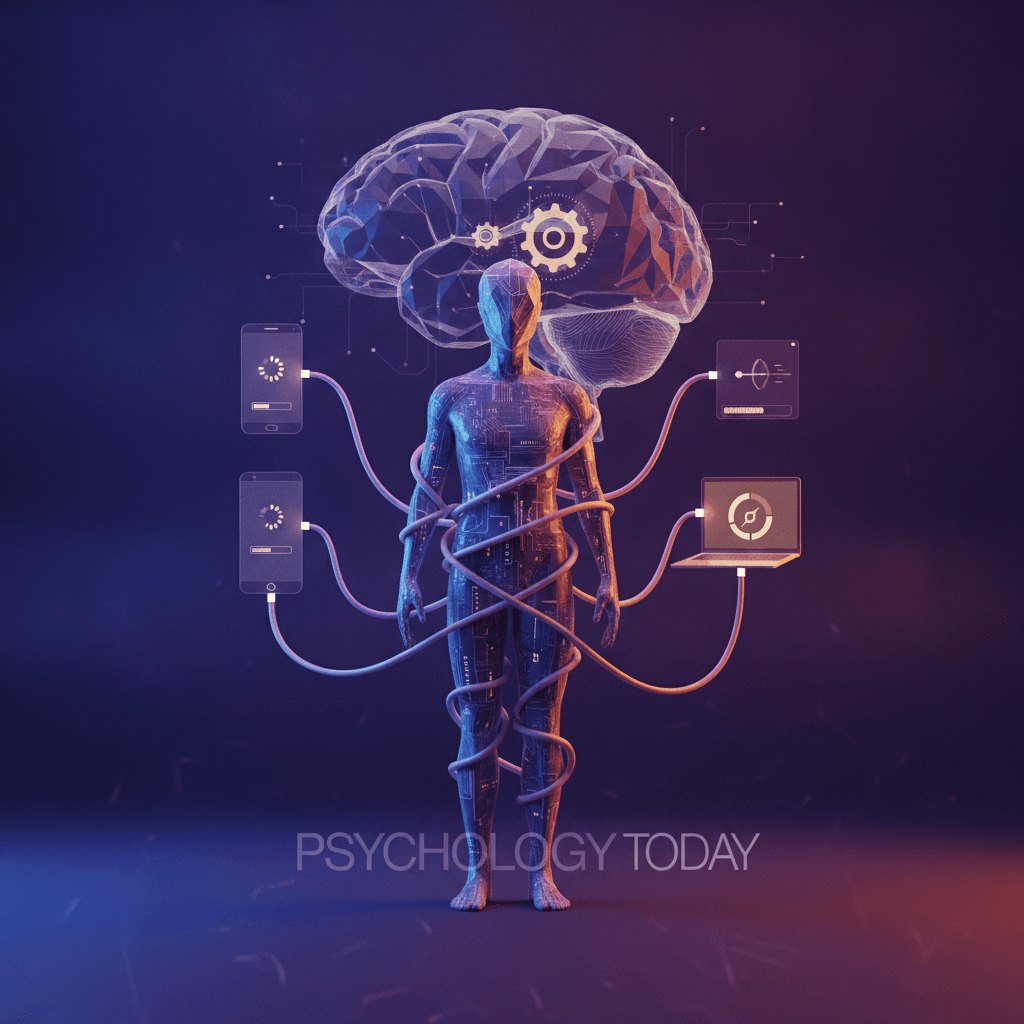
Click 'Transfer' on a modern cross-border banking app like Wise, and you are rarely met with an instantaneous confirmation screen. Instead, the interface deliberately pauses. A sleek progress ring turns smoothly, accompanied by step-by-step status updates: verifying compliance details, checking foreign exchange rates, and securing liquidity. In reality, modern database queries and algorithmic checks clear these hurdles in a handful of milliseconds. The system could finalise the transaction almost instantly, but the interface deliberately chooses to drag its feet.
This engineered hesitation is not an engineering failure. It is a calculated piece of user experience design grounded in cognitive psychology. As artificial intelligence platforms and automated financial tools take over increasingly complex, high-stakes tasks, product teams are discovering a curious truth: instantaneous software makes human users nervous. To earn trust, modern interfaces must appear to sweat.
The Psychology of Hard Work
The underlying psychological phenomenon relies on the effort heuristic, a mental shortcut where human beings judge the quality or validity of an outcome by how much effort was apparently required to produce it. When a human expert takes three days to review a contract or underwrite a loan, we assume the output is thorough. When a server farm completes the same analysis in forty milliseconds, our instincts flag it as superficial or careless.
In 2011, Harvard Business School researchers Ryan Buell and Michael Norton formalised this dynamic in a landmark study on service design. They demonstrated that users consistently rated travel search engines as higher quality when the site explicitly listed the airlines it was scanning one by one, even when those sites took significantly longer to display results than instant competitors. The visible progress indicators created a perception of operational value. The service felt more valuable because the software appeared to be working tirelessly on the user's behalf.
From Travel Engines to Neural Networks
What began as a clever pattern for flight aggregators like Kayak and tax filing software like TurboTax has become the defining design language of the generative AI era. When OpenAI introduced reasoning-focused models such as o1, the interface explicitly exposed a drop-down thinking tray. Users watch a live timer tick upward while short text snippets update in real time: searching internal documentation, evaluating edge cases, and formatting response.
While deep learning inference genuinely requires compute time, product designers carefully curate the way that latency is presented. The interface breaks a complex, opaque process into digestible, human-paced beats. By pacing the output and staging the internal reasoning sequence, the application converts potential user frustration over delay into admiration for the system's analytical rigour.
The Vulnerability of Optical Rigour
There is, however, a fragile boundary between helpful reassurance and patronising theatre. When an interface artificially slows down a simple task solely to manufacture trust, it risks degrading the user experience for frequent users who value speed above all else. A customer making their fiftieth routine currency transfer does not need to be reminded that exchange rate validation exists; they simply want their money moved.
Furthermore, as public awareness of these interface tricks grows, performative friction can backfire. If a user discovers that an animated progress bar is merely a timed animation running on a fixed three-second loop rather than a reflection of actual background tasks, confidence vanishes instantly. What was intended as a signal of thoroughness transforms into deceptive design.
Designing for True Transparency
As software automation accelerates, product teams must move away from superficial theatre and toward meaningful operational transparency. The goal should never be to fake labour, but rather to illuminate genuine complexity where it actually exists. If a machine learning model takes three seconds because it is running parallel safety evaluations, showing those real system states builds legitimate confidence without resorting to trickery.
The future of software design lies in respecting the user's intelligence while addressing their psychological need for certainty. As users grow increasingly accustomed to instant machine intelligence, the tolerance for artificial delays will inevitably decay. Until then, the software on our screens will continue to pause, catch its breath, and wipe its brow, ensuring we feel we got our money's worth.
Written and curated by AI.
More in Psychology
The Defensive Computing Reflex: Why Unsolicited Intelligence Triggers Interface Reactance
As software platforms aggressively insert automated assistants into everyday workflows, users are spending significant cognitive effort hunting down kill switches to protect their agency.
18 Aug 2026
The Soft-Block Trap: How Granular Feed Curation Is Warping Our Tolerance for Everyday Friction
Bluesky's latest feed control feature highlights a growing UI trend: using granular filters to quietly manage online acquaintances rather than dealing with social friction.
11 Aug 2026
The Synthetic Intimacy Trap: How Generative Scams Exploit Regional Cognitive Anchors
Generative AI is dismantling our implicit mental spam filters. By mastering regional idioms and institutional registers, modern cybercriminals bypass cognitive defences to scale hyper-local fraud.
5 Aug 2026